
One-Off (Single Reminder) Nags
One-off nags allow you to send a single reminder email to users who have not completed a course.
This type of nag is useful when you want to send one prompt without continuing reminders, for example as a final reminder before a deadline or as a gentle follow-up after a training rollout.
A typical use case might be:
- Send one reminder 14 days after enrolment
- Do not send any further reminders
- Allow administrators to review completion manually afterwards
Step 1 — Select Alert Type
From the menu on the left-hand side of the page:
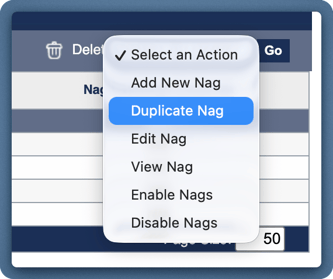
- Select Nagware
- Click Add New Nag
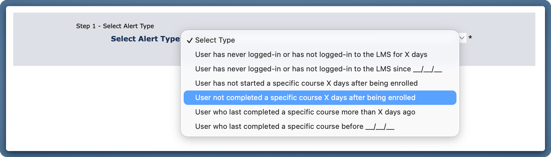
Under Select Alert Type, choose:
User not completed a specific course X days after being enrolled
This alert type automatically identifies users who have been enrolled on a course but have not completed it after a specified number of days.
Step 2 — Enter Details
This section defines which course the nag applies to and when the reminder should be triggered.
Nag Name
Use a clear, descriptive name that makes the purpose of the nag easy to recognise later.
Good examples
- GDPR — One-Time Reminder
- Code of Conduct — Final Reminder
- Anti-Money Laundering — Single Follow-Up
Clear naming makes it easier to manage reminders later.
Number of Days
This setting controls how long after enrolment the reminder should be sent.
Example
14
What this means
If a user has not completed the course within 14 days of being enrolled, the reminder email will be sent automatically.
Select Course
Choose the course that the nag should monitor.
The nag will only apply to users enrolled on this specific course.
Important
If the wrong course is selected, reminders will not be sent to the intended users.
Step 3 — Sending Instructions
This section controls when the reminder is sent and ensures it is only delivered once.
Start Date
This is the date the nag becomes active.
Best practice
Set the Start Date for tomorrow or later, never today.
End Date
This is the date the nag will stop running.
To send the reminder once only
Set the End Date to the same date as the Start Date.
This ensures the reminder is sent a single time.
Number of Emails
This controls how many times the reminder email will be sent to each user.
Configuration for a one-off nag
Set this to: 1
This ensures the reminder is only sent once.
Interval
This controls how frequently reminder emails are sent.
Configuration for a one-off nag
Set this to: 1
Since only one email will be sent, the interval will not affect behaviour.
Step 4 — Filter Recipients (Optional)
In most cases, you should leave this section blank.
If a course has been assigned to users, the reminder will automatically be sent to anyone who has not completed the course.
How to apply a filter
To add a filter:
- Select the field under Include
- Choose a Condition
- Select the Value
- Click Add
Important
The filter will not be applied unless you click Add.
If you need to change a filter after adding it, click Clear Conditions and create it again.
Step 5 — Email Details
This section defines the reminder email that users will receive.
A clear and helpful email makes it easier for users to complete their training quickly.
Email Subject Line
Keep the subject line clear and direct.
Examples
Training Reminder — Please Complete
Final Reminder — Training Outstanding
Reminder — Action Required
Email Body
Write the message that users will receive.
The email should include enough information for the user to complete the course as soon as they receive it.
Always include
- The LMS login link
- The user’s username
- Instructions for resetting their password
Recommended variables
You can use Insert Variable Data to insert useful fields such as:
— the LMS website address— the user’s username
Important
Avoid changing text inside curly brackets, as these are system variables.